
These days there are a plethora of tools out there for making the roadmap planning and product management process more visual and one that connects the different parts of the business together.
But it’s not just about the tools.
Everything starts and end with people.
Get everybody on board
One of the key things in product management that many omit – is to persuade and convince the whole business stack (from CEO at the top all the way down to all the levels) that every product decision must have a thought out, “mindful” reason.

If you don’t convince everybody that the only way to plan is to have a common system and to always assess all initiatives against the same measuring yardstick, no matter what great processes you try to implement, the people will just go around it.
You have to sell the process, so the benefits are clear and everybody is bought in and eager to follow it – in return for clear rewards.
Always solve a real problem
Every feature – be it user visible or more “back end”, must be justified by having impact on the overall business goals and KPI’s.

It can be a major module, needing months of work or a single button – as long as both will further make a difference on where the company is trying to get to.
There are often many ideas which sound great and are “shiny” but they often will have little impact on the main business drivers. Watch out for them. Spot them and identify them.
Points scoring
Better still, try and put a rough “points” value on it.

This is similar to the way that agile teams of software developers estimate features by assignment to them complexity points.
With multiple departments, each suggesting and requesting features and modules, it is easy to stop seeing the wood for the trees.
By organising requests into a rank prioritised and sorted by business value and ROI order, it is easy to see what should be done first and why.

One of the most important jobs of managing product and roadmaps is to really understand each feature, request and idea, their connection to overall business goals and the impact on the latter.
Follow the breadcrumbs
This is not easy to do and often the link is complex, multi-chain and not obvious.

For example, a simple user “convenience” feature may look like low value vs improving the performance of an automated performance algorithm, which could increase business margin by 5%.
However, that simple convenience feature, may have been requested by a user from the most strategic client, the one who is, or very soon might generate 50% of the company’s revenue.
Suddenly, the “convenience” feature is very “strategic”.
Don’t boil the ocean
Agile has been for a while but often it is a buzzword people don’t understand fully.

Investors and board members often still work in the “olden days” time scales of construction and physical build business models and expect plans to stretch quite far into the future, sometimes as much as 24 months.
The online world is more more and more social driven and being software based has change lead times that are sometimes hours – literally, let alone days and weeks.
Facebook, twitter and many other companies all put out new features several times a day and based on the response (which they carefully monitor) they plan the next changes.
They do not have 2 year plans.
So it is critical to educate those that are not up to date with these new disciplines of the new pace and explain why agile and iterative development is a paradigm shift.
By doing so everybody can be singing from the same hymn sheet and more time and energy can be spent on innovation and less on administrative management.
This does not mean not having a company strategy or long term top line goals, KPI’s and drivers. It just means that making detailed plans for the product – especially with accurate time scales – in a software company is often impossible.
Right tools for the job
All this is done and managed much easier if you use tools for entering, cross referencing and visualising the information.
There are many tools on the market now that help with tasks such as collating the features and requests into one place, assigning value to them, mapping them out over time, splitting them into version – all in a friendly fashion that even the most old fashioned non-tech in your team will be happy using.
The right tool can be the make or break of a process and even of the whole company!
Imagine using a faulty boilers or one that’s hard to turn on and off in your house – huge impact on your daily living and comforts!
-
First there is AHA.IO

A paid tool but very comprehensive and one which has all basis for product planning covered – from business priortisation, all the way to low level tech task tracking.
A lot of work has gone into the system and it shows.
Clearly built from the top down and by product management guru’s so even if you’re not that much of an expert, the system will help you become one.
-
New kid on the block – Project Place
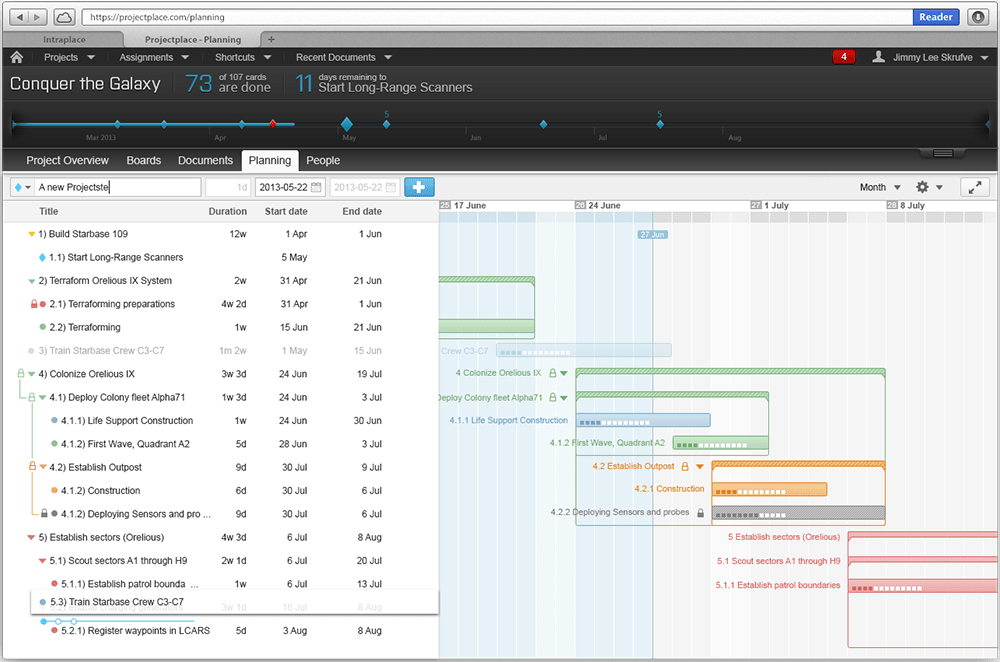
A new player has come onto the scene with a great looking product and one which seems to have a feature most others a missing – a USABLE Gantt chart!
Whilst most people switch off immediately as soon as they see one, Gantt charts are excellent at showing dependencies, sequences and overall plan against a calendar.
Whilst the basic one project version is free, Gantt charts are only available in the Pro version which is $49 per month.
There is also the usual canban / agile board with swim lanes other standard features.
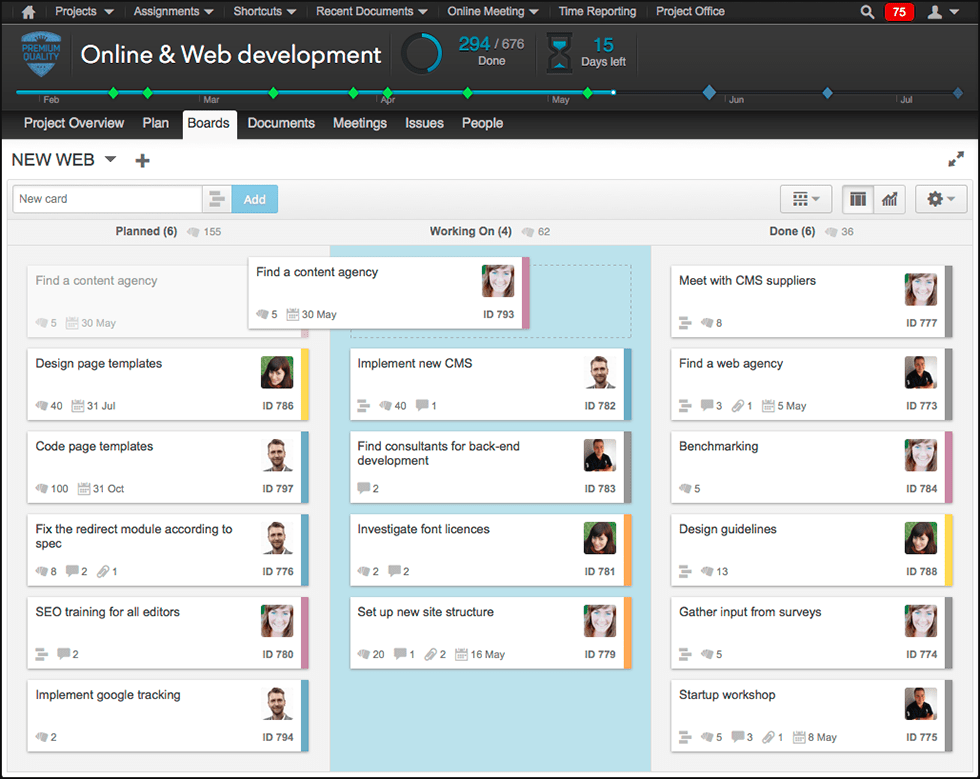
Project Place comes with a ton of features, alas some are only available in the Enterprise version. Most notable features include:
- Mobile app (includes canban/agile planner and doc manager)
- Meeting planner
- Conference tool (screen sharing and voice)
- Project dashboard
- Doc sharing (ala Google Drive)
A nice tool all in all – on par with Aha and WizeLine + a few bells and whistles that may be overkill for most.
-
Financial focus – WizeLine
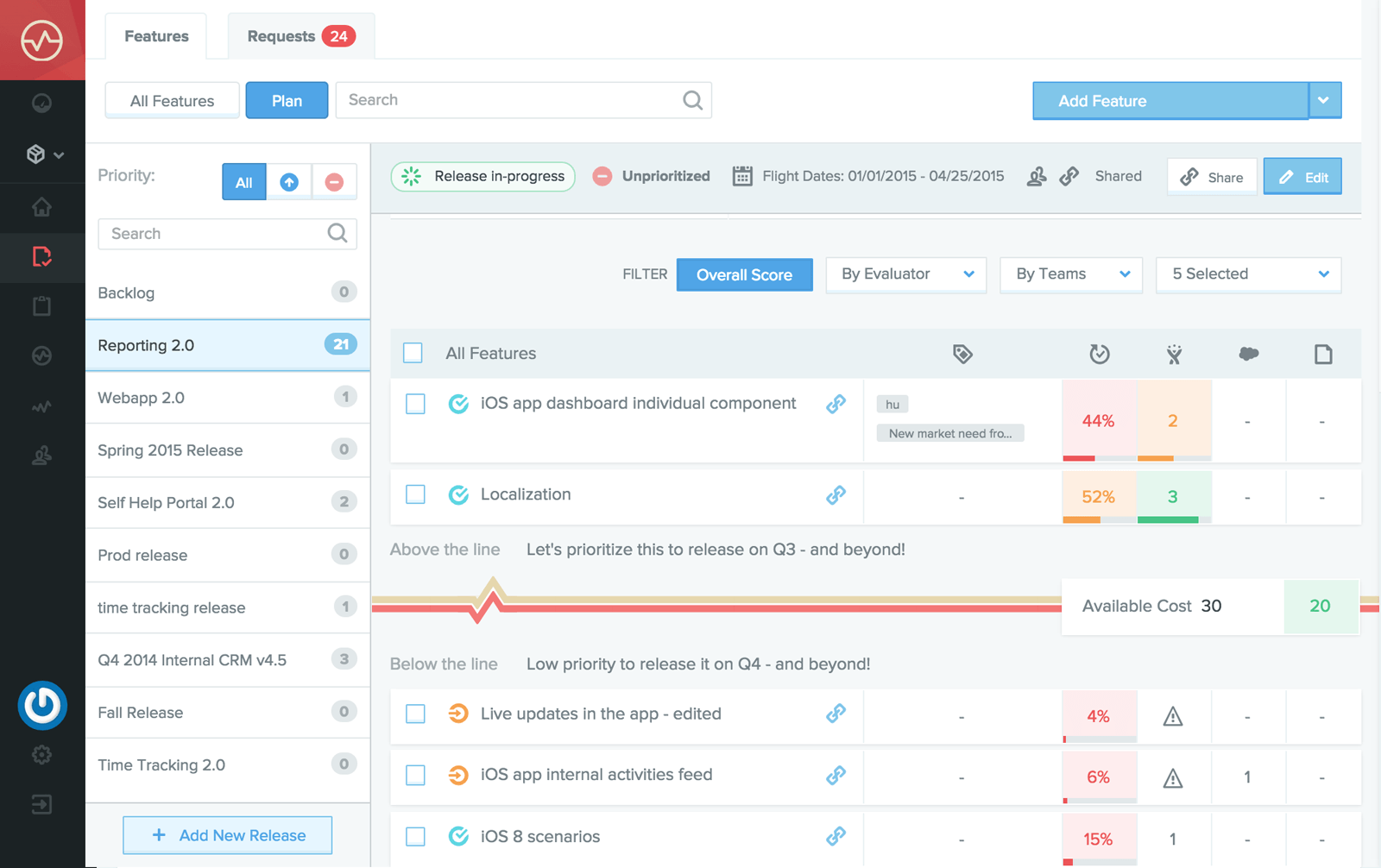
For those more cost concious and pure finance driven the product planning and managing solution from WizeLine will appeal strongly.
It has excellent rich features for prioritising features and requests and same again for tracking progress.
It also comes with built in easy reporting of cost tracking so you can quickly see how much each project and feature has cost so far and (hopefully) compare this to the the ROI the item delivers.
-
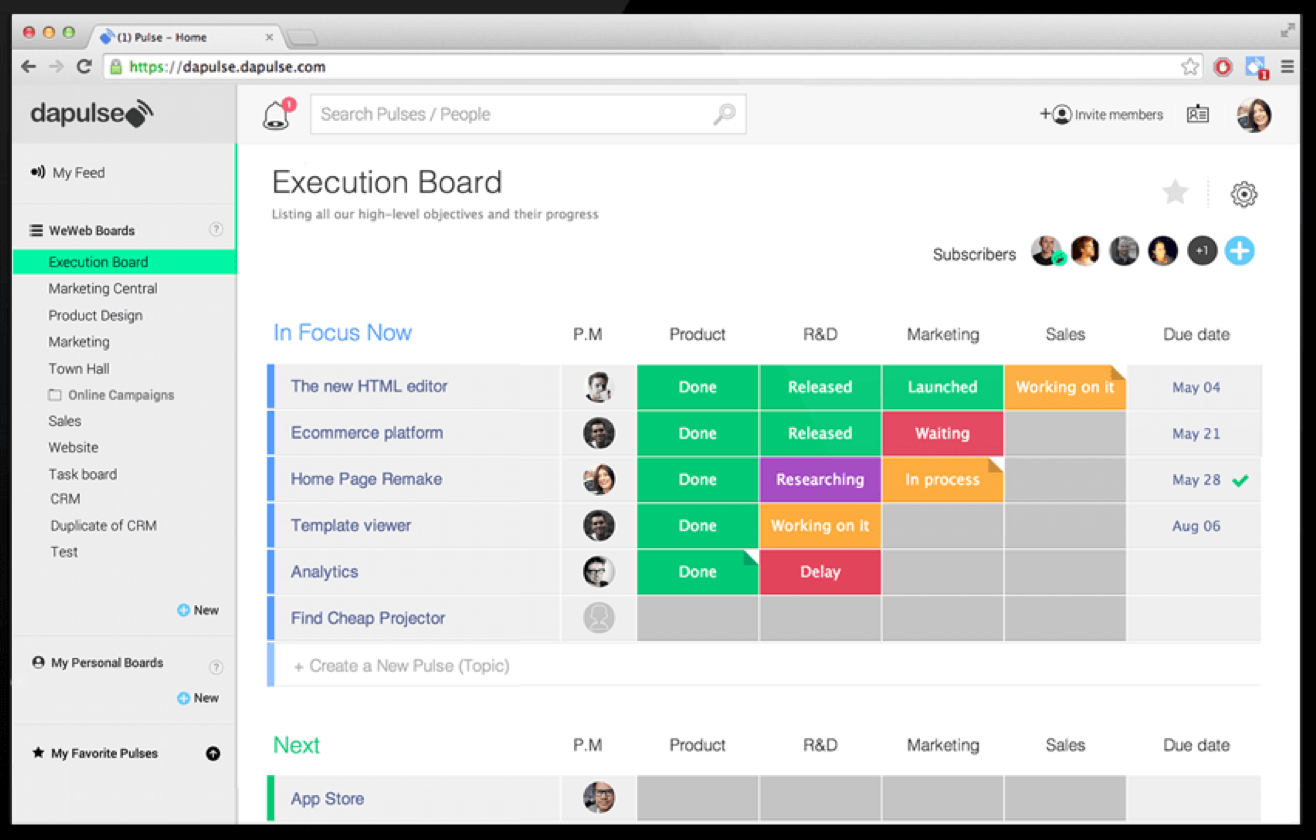
Then there is dapulse
A simpler tool, aimed at smaller, more agile and new age type businesses.
Comes with a great status board which quickly shows all the major mile stones and if they’re on track or behind.
-
Next in line is Trello
Trello is more of an agile board and is good for managing lists – and is very good at it, but don’t ask it to do more.
It does a superb job of helping organise and re-arrange lists of various categories, all drag and drop, colour coded and clear to understand.

Trollo is good for personal task management and small projects and teams but for more complex set ups look to Aha, YouTrack, WizeLine and Project Place.
-
Roadmaps? roadmunk!
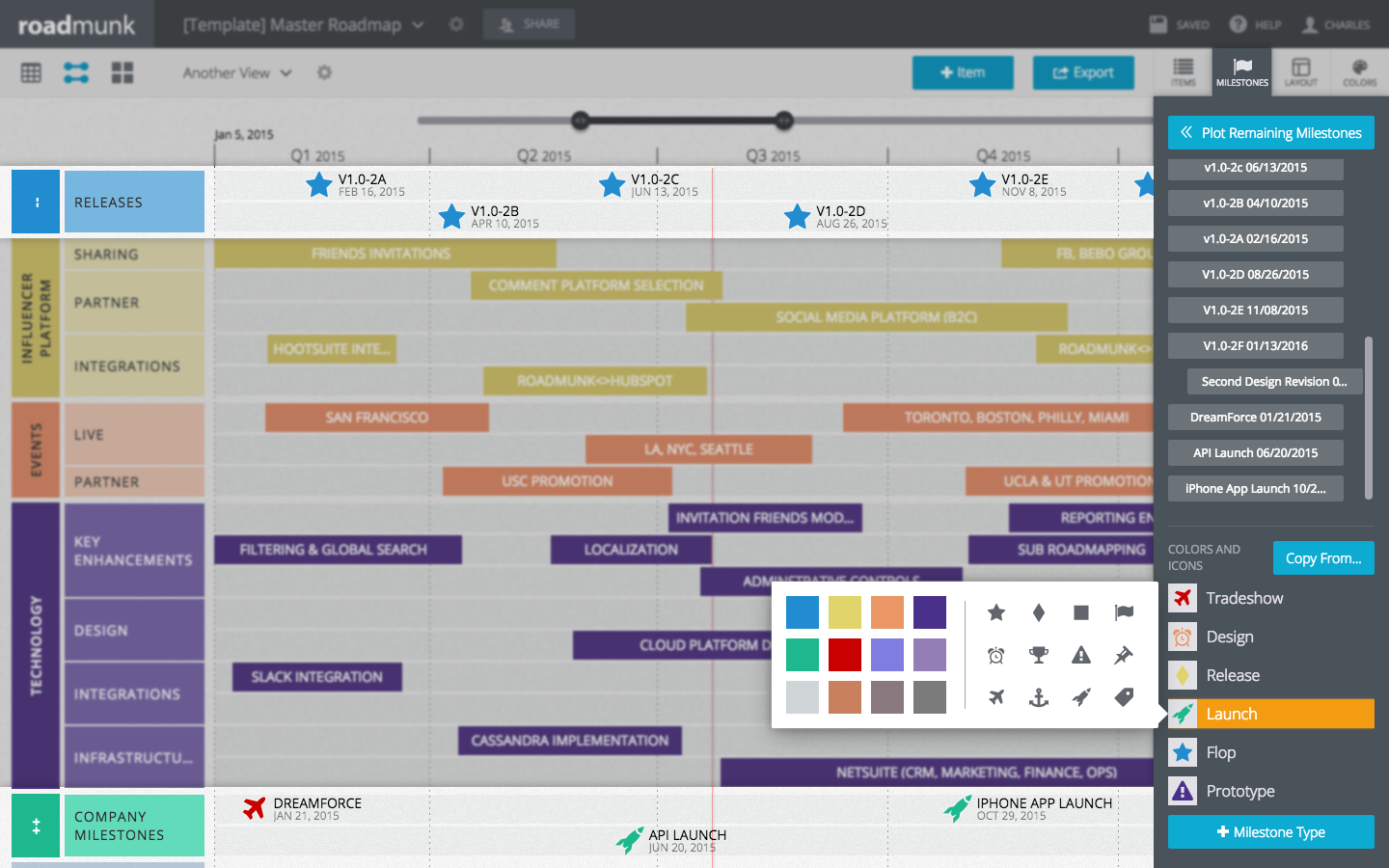
For pure roadmap type stuff, there is roadmunk which just does 2 things:
- time line view
- swimlanes
It does it will and will save you tons of time if you need to build a nice looking roadmap and whilst it does integrate with Atlassian Jira and does not connect to any other such tools, e.g. Atlassian YouTrack.
You can import CSV files and such like into it to save you time re-typing your features, modules and projects, but that’s about as far as integration goes (at the time of writing)
Closing words
That pretty much wraps it up.
There are of course many more tools and I’d be happy to add them to the list but I’ve tried to pick the ones which have now been around for some time and those which have a fair amount of product management features built in versus those which are more tech and developer team oriented, such as Atlassian Jira, RedMine and JetBrains YouTrack.

 Mind Iterations